
Black Mould and Your Health
What the risk actually is, who is most affected, and what genuinely removes it.
Read the guide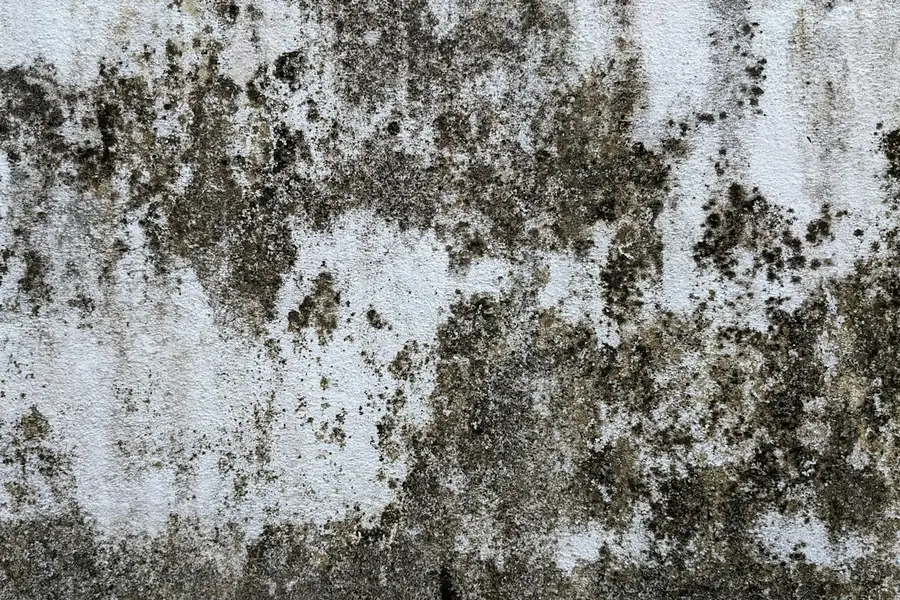
Damp and mould moved from a maintenance item to a compliance one. What matters now is not only that you fixed it, but that you can evidence what you found, when, and what you did about it.
Last reviewed September 2026 by Tony Murphy, Founder & Managing Director. We update these guides in place rather than letting them go stale.
Three overlapping frameworks apply, and it is worth knowing which is which.
The Housing Health and Safety Rating System is the risk assessment tool local authorities use. Damp and mould growth is a specific hazard category. A Category 1 hazard obliges the authority to take enforcement action.
The Homes (Fitness for Human Habitation) Act 2018 implies a term into tenancies that the property be fit for human habitation throughout. Critically, it allows the tenant to bring proceedings directly rather than waiting for the council — which changed the practical risk considerably.
Awaab's Law, introduced through the Social Housing (Regulation) Act 2023, attaches statutory timescales to investigating and remedying damp and mould hazards in social housing, with phased implementation extending the requirements over time.
The government has also published guidance for rented housing providers, which is explicit that damp and mould should not be dismissed as a lifestyle issue. It is short and worth reading before you respond to a complaint.
Occupancy genuinely affects moisture loading — drying washing indoors in an unventilated flat is a real contribution. But the legal question is whether the property is fit, and a property that cannot cope with normal occupation without growing mould is not made fit by telling the occupant to open a window. Government guidance says so directly.
Because disputes about damp in rented property are almost always disputes about cause, and cause is the one thing that can be established objectively.
A survey that records a surface temperature of 11°C at a concrete lintel, a room relative humidity of 74%, and an extract fan moving 4 l/s against a specified 15 l/s tells you three things at once: there is a cold bridge, the air is carrying too much moisture, and the ventilation is not performing. That is a specification, and it is also a defensible record that you investigated properly.
Our condensation and mould surveys are written for this purpose — dated conditions, measured readings, photographs, hazard assessment and a remedial specification with timescales.
| Measure | Addresses | Guide cost |
|---|---|---|
| Humidity-sensing extract fan | Bathroom or kitchen with undersized or badly ducted extraction | £250–£450 |
| dMEV continuous extract | Continuous low-rate extraction, boosting on humidity | £400–£700 |
| PIV unit | Whole-property humidity; loft-mounted fresh air supply | £650–£1,200 |
| Insulated reveals / thermal board | Localised cold bridging at lintels and reveals | £400–£1,500 per room |
| Biocidal mould treatment | Removing the colony rather than the stain | £200–£600 |
| Condensation & mould survey | Establishing cause, with a defensible written record | £240–£395 |
Worth calling out because we find it constantly. A bathroom extract fan ducted into the loft void rather than to outside does not remove moisture from the building — it relocates it into the coldest part of the structure, where it condenses on the underside of the roof and wets the timbers.
The tenant still has a mould problem. The landlord now also has a roof timber problem. If you own older stock with retrofitted fans, this is worth checking across the portfolio.
Where the mould results from a defect in the property — disrepair, inadequate ventilation, cold bridging or a failure of the fabric — yes. Under the Homes (Fitness for Human Habitation) Act 2018 a tenant can bring proceedings directly, and local authorities can enforce under the HHSRS. A property that cannot be occupied normally without growing mould is unlikely to be considered fit.
Awaab's Law, introduced through the Social Housing (Regulation) Act 2023, sets statutory timescales for social landlords to investigate and remedy damp and mould hazards. It applies to social housing and is being implemented in phases. Private landlords are not directly bound by the same timescales but remain subject to the Fitness for Human Habitation Act and HHSRS enforcement — and the timescales are increasingly treated as the benchmark for reasonable response.
Partly, and it is measurable rather than a matter of opinion. Drying washing indoors adds a genuine moisture load. But the legal test is whether the property is fit, and a dwelling that cannot handle ordinary domestic moisture without growing mould has a ventilation or insulation deficiency. A survey separates the fabric's contribution from occupancy, which gives you a defensible position rather than an argument.
The date the tenant reported it and your dated response; the inspection report with photographs and measured readings; the diagnosis; the remedial specification and timescale; invoices and completion records; and any follow-up inspection. That file is what demonstrates you investigated and acted, and it is the difference between a defensible position and a contested one.
Routinely. We attend with proper notice, schedule directly with tenants where the agent prefers, protect floors and furnishings, control dust and work in phases so the property stays habitable. Reports go to the agent, the landlord or both, in a consistent format suitable for your records.
What the risk actually is, who is most affected, and what genuinely removes it.
Read the guideWhat a mortgage valuer's damp referral means and what report satisfies it.
Read the guideWhat you pay, what you get for it, and why a free survey is rarely free.
Read the guide
Book a survey and you get a written report: what is causing the damp, what it takes to fix it and what it costs. No pressure, no guesswork.
Survey fee deducted from the cost of works if you proceed