
Why Damp Proofing Fails
The six reasons remedial damp work gets done twice, and how to avoid them.
Read the guide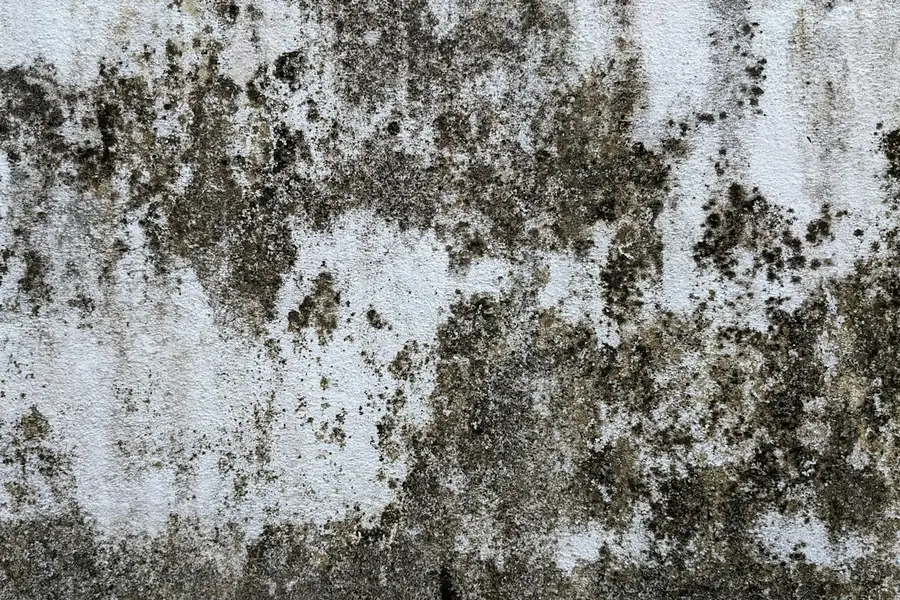
The two get confused constantly, and treating one as the other is the single most expensive mistake in domestic damp work. You can narrow it down yourself in about ten minutes.
Last reviewed September 2026 by Tony Murphy, Founder & Managing Director. We update these guides in place rather than letting them go stale.
Rising damp is groundwater drawn upwards through masonry by capillary action, in properties where the damp proof course is absent, has failed, or is being bridged. It is a real phenomenon and we do find it in London's older solid-wall stock — but it is diagnosed far more often than it occurs.
How to recognise it: a roughly horizontal tide mark up to about a metre above floor level, never higher. White fluffy salt deposits (efflorescence) on the plaster. Plaster that sounds hollow when tapped and crumbles at the skirting. Decaying skirting boards. Critically, it does not change with the weather — a wall with genuine rising damp looks much the same in August as in February.
The one-metre ceiling is the giveaway. Capillary rise in masonry is limited by gravity and evaporation, so damp appearing at 1.8m up a wall is not rising damp, whatever anyone tells you.
Condensation occurs when warm, moisture-laden internal air meets a surface cold enough to drop it below dew point. The water is not coming from the ground or through the wall — it is coming from inside the room, out of the air.
How to recognise it: black spotted mould rather than staining. It appears in room corners, behind wardrobes and sofas pushed against external walls, around window reveals, and on north-facing walls. It is markedly worse from October to March and often improves in summer without anyone doing anything. Windows stream in the morning.
A four-person household puts something like twelve litres of water into the air a day through breathing, cooking, showering and drying clothes. In a well-ventilated house that leaves. In a sealed one with a broken extract fan, it condenses on the coldest surface available.
Penetrating damp is water crossing the building envelope from outside — through failed pointing, spalled brick, cracked render, perished sealant, a bridged cavity, or rainwater goods that have stopped working.
How to recognise it: damp patches at any height, including upstairs. A clear relationship with the weather — noticeably worse two or three days after heavy driving rain, drying back in settled spells. The stain often mirrors something outside it: a downpipe, a window sill, a chimney stack.
None of this replaces a survey, but it will tell you which of the three you are probably dealing with — and, more usefully, whether the quote in front of you is plausible.
The most common cause we find of what gets sold as rising damp is a bridged DPC — a raised patio, a flowerbed, a rendered plinth or a new driveway sitting above the damp proof course, letting water cross it. The wall genuinely is damp. The damp proof course is genuinely working. Injecting it achieves nothing, and the fix is usually a day's groundwork.
Because the treatments are completely different and none of them is cheap. A chemical damp proof course with replastering runs into the thousands. If your actual problem was condensation, you have spent that money and the mould will be back the following winter, because nothing about the ventilation changed.
Equally, a landlord who installs a positive input ventilation unit to fix what is really penetrating damp through failed pointing has spent real money on the wrong defect and still has a tenant with a damp wall.
This is the whole argument for diagnosing before treating, and it is why we charge for surveys — see our guide on why damp proofing fails.
Rising damp forms a horizontal tide mark up to about a metre above floor level, leaves gritty salt deposits, and does not change with the weather or the season. Condensation appears as black spotted mould in corners, around windows and behind furniture on cold external walls, and is much worse between October and March. If the problem improves in summer without anyone doing anything, it is condensation.
It is real, but it is genuinely rare compared with how often it is diagnosed. Groundwater does rise through permeable masonry by capillary action where there is no working damp proof course. The problem is that the label gets applied to penetrating damp, condensation, plumbing leaks and bridged damp proof courses — all of which need entirely different fixes.
Frequently, and it is one of the main reasons single-cause diagnoses go wrong. A cold, poorly ventilated room with a failed gutter outside will have both penetrating damp and condensation, and fixing only one leaves a visibly damp wall. A survey establishes the proportions rather than picking whichever cause matches the service being sold.
It will reduce humidity in the room it is standing in, which helps with condensation symptoms and is genuinely useful while a wall dries out after remedial work. It does nothing about a leaking downpipe, a bridged damp proof course or a cold bridge at a concrete lintel. Treat it as a tool during drying, not as a diagnosis or a cure.
Two reasons. Surfaces are colder, so internal moisture condenses more readily. And windows stay shut while more moisture is generated indoors — heating, cooking, drying washing inside. Genuine rising damp barely varies by season, so a strong winter pattern is a strong pointer towards condensation.
The six reasons remedial damp work gets done twice, and how to avoid them.
Read the guideHow worried to be, what it costs to fix, and how to use it in a negotiation.
Read the guideWhat Type A, B and C systems cost in London and which one your structure needs.
Read the guide
Book a survey and you get a written report: what is causing the damp, what it takes to fix it and what it costs. No pressure, no guesswork.
Survey fee deducted from the cost of works if you proceed